Basket 0 item(s) £0.00 + VAT
Call Us 01482 861 040

Prepare for the Key Changes Coming in October 2026 with our Sexual Harassment Awareness Training Course

Internal Auditing and Root Cause Analysis Training

4.6 (63 reviews)
Internal Auditing Course cert

Unlimited Resits Customer Support Instant Access

£35.00 +VAT per person


Course information
  • Certificate on Successful Completion
  • Access course on Desktop, Laptop or Tablet
  • 30 Multiple Choice Questions
  • Course Duration: 3 hours
  • CPD Points: 3

The online Internal Auditing and Root Cause Analysis Training course will help those working in food manufacturing production to understand the reasons for and importance of internal auditing and how to implement a risk-based internal auditing program.

The benefits of an internal auditing and root cause analysis are described together with the internal audit team's roles, qualities, and responsibilities. Good Manufacturing Processes (GMPs), Good Hygiene Practices (GHPs), and other elements of food safety practice are also covered, together with selected audit practices for these elements of the course.

This Internal Auditing and Root Cause Analysis will help a food business operate safely and to a high standard by empowering the individuals tasked in this role to implement an internal auditing program that will comply with industry standards set by the BRC and SALSA. With a clear understanding of the importance of a risk-based approach to internal auditing, you will be able to successfully plan and prepare, keep records of audit evidence, and easily show the actions taken if the worse were to happen.

Pleae note: The British Retail Consortium (BRC) Food Safety Standard has been rebranded as BRCGS (Brand Reputation Compliance Global Standards


  • Complies with BRCGS and SALSA Industry standards
  • Train online at your own pace with a full audio voiceover
  • Accredited by CPD
  • Certificate on successful completion
  • Course duration: 3 hours
  • Unlimited resits at no cost

Discounts on Bulk Purchases

Take advantage of our bulk discounts which will reduce your overall cost of training. Better still, any courses you order can be registered to users upto two years later so there's no need to worry about training credits expiring.

Courses Purchased Discount
10+ 10%
20+ 20%
50+ 30%
75+ 40%
100+ 50%


Who is this Online Internal Auditing and Root Cause Analysis Training for?

This Internal Auditing and Root Cause Analysis training course is ideal for anyone working in food production, particularly those with prior experience in HACCP training . While there are no formal prerequisites, the course is designed for individuals in roles responsible for maintaining the highest standards of food safety and quality throughout all stages of the production cycle.

Our Allergen Awareness Training covers key areas where root cause analysis plays a pivotal role in managing risks and investigating incidents.


Course Screenshots
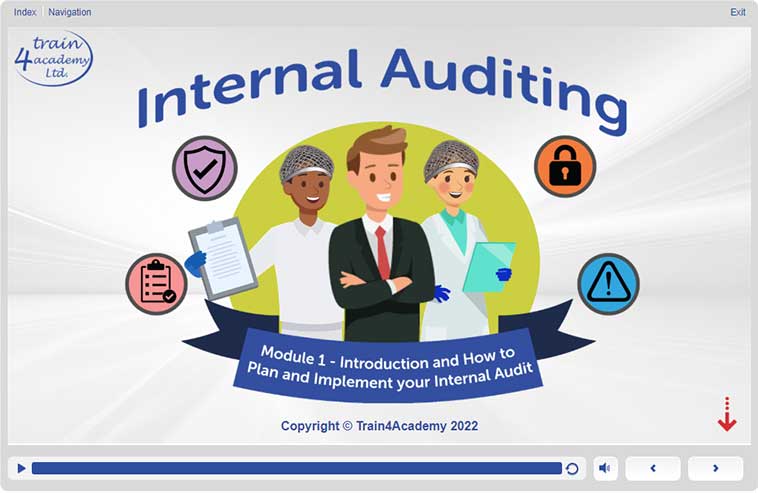
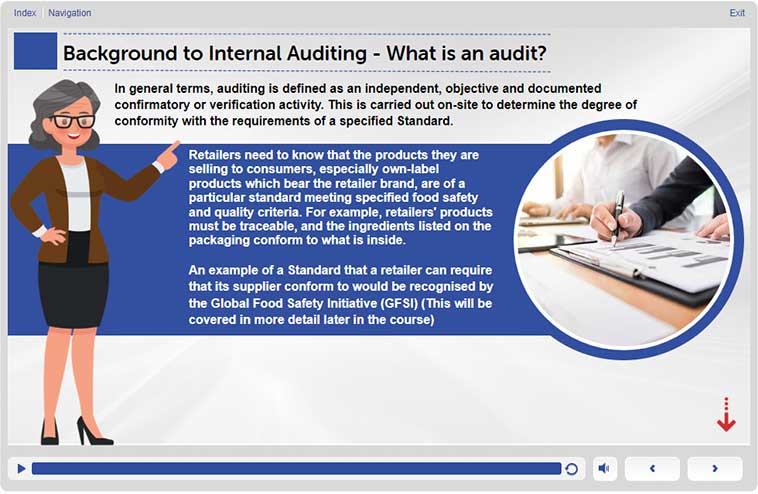
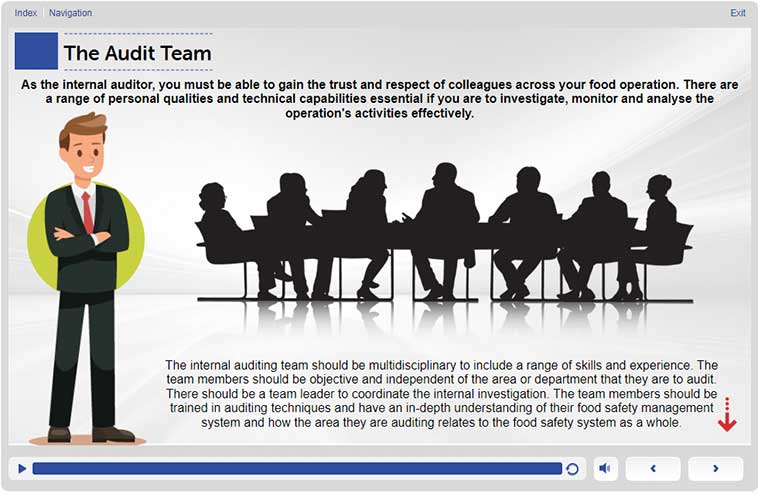
  • Internal Auditing Training Course - Welcome Screen
  • Internal Auditing Training Course - Grinding Wheel Hazards
  • Internal Auditing Training Course - The 'Do-nots' of using Abrasive Wheels


Course Aim

This training course aims to help those successfully prepare and plan an internal audit by highlighting the potential risks posed by the businesses' current procedures and carrying out an audit to industry standards. Along with utilising good food manufacturing processes whilst being aware of possible threats faced that can be reduced or removed by understanding the benefits of carrying out a root cause analysis.

To accompany this course, individuals will benefit from completing a food safety level 3 course, which provides in-depth training on avanaced food safety management and hygiene.


Learning Objectives

On completion of the course, you should be able to:

  • Explain what an audit is
  • Recognise the importance of an internal food safety audit
  • List the benefits of internal auditing to your business
  • Describe the importance of a risk-based approach to internal auditing
  • Explain Good Manufacturing Processes (GMPs)
  • Identify Good Hygiene Practices (GHPs)
  • Explain the differences between HACCP and Root Cause Analysis
  • Describe the benefits of root cause analysis
  • List the five steps in the root cause analysis

Course Content

This course is made up of the following modules:

  • Module 1 - An Introduction to Internal Auditing and to How to plan your audit

    This section of the course concentrates on the importance of understanding internal auditing is, the benefits it can bring to your business and understanding the roles and responsibilities of an audit team.

  • Module 2 - Good Manufacturing Processes & Internal Auditing Food Defence

    In this section, we will cover the process of ensuring a food business maintains a high standard from preventing matter entering the finished product, carrying out planned maintenance of equipment, using approved suppliers, and understanding the effectiveness of pest control. It also covers Food Defence, HACCP, TACCP and VACCP and their roles within your internal audit.

  • Module 3 - Root Cause Analysis

    This section looks at Root Cause Analysis (RCA) and how it differs from HACCP, the benefits of RCA and the requirements for BRCGS food standards.

Download Course Overview (PDF)

Assessment

On completion of the course lessons and training material an online assessment will automatically unlock. The assessment will contain 30 multiple-choice questions and a mark of 75% or above will be required to pass.

The assessment will be marked instantly and so you will know straight away if you have passed or not. If you don't pass first time there's no need to worry. Unlimited resits at absolutely no additional charge are available so you can retake the assessment again as many times as you need to.


Internal Auditing and Root Cause Analysis Training Certification

Our entire library of training courses is accredited by the CPD Certification Service as adhering to the universally recognised Continuing Professional Development (CPD) guidelines.
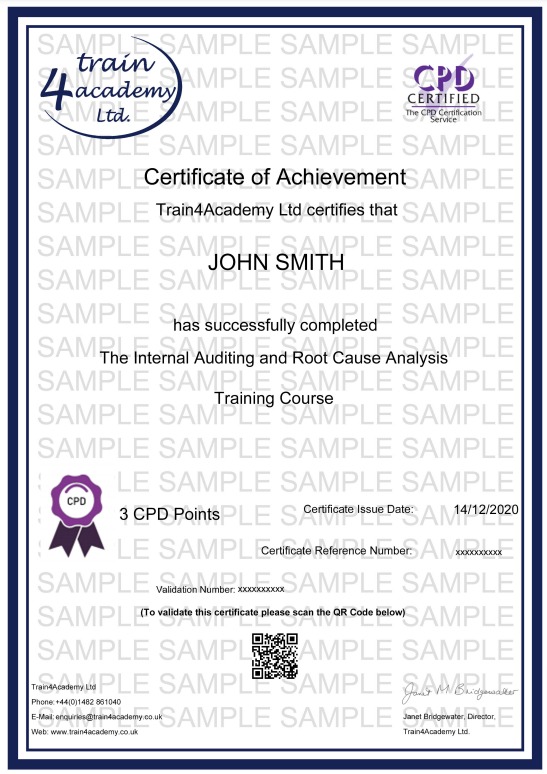
Internal Auditing Training Certificate - Example

Upon passing the online assessment you will have the options to both print and download your Internal Auditing and Root Cause Analysis Training Certificate in PDF format. In addition to this an automated email will also be sent to your chosen email address containing a link to your certificate ensuring you always have access to a copy.

Furthermore, a QR code is displayed on each certificate which when scanned by a smartphone links to our certification database. This allows employers, auditors and local authority inspectors, for example, to establish a certificates validity instantly and at any time.


Common Internal Auditing & Root Cause Analysis Training Questions

Internal audits are a proactive way of checking whether your food safety and quality management systems are working as intended. Rather than waiting for a third-party certification audit or a customer complaint to identify issues, internal audits allow organisations to assess compliance, verify procedures are being followed and identify opportunities for continual improvement.

An effective internal audit should evaluate more than just documentation. Auditors should observe processes, interview employees and review records to determine whether day-to-day practices match documented procedures.

An Internal Audit Helps To... Why It Matters
Verify compliance Ensures procedures meet company and certification requirements.
Identify non-conformities Detects issues before they become larger problems.
Assess effectiveness Confirms processes are delivering the intended results.
Promote continual improvement Encourages ongoing improvements to food safety and quality systems.
Prepare for certification audits Builds confidence ahead of external assessments.

By regularly auditing systems and processes, businesses can strengthen food safety, improve operational performance and demonstrate due diligence.

Audit findings should always be based on objective evidence rather than assumptions or personal opinions. Gathering evidence from multiple sources helps confirm whether procedures are consistently implemented and effective.

Common sources of objective evidence include:

  • Documented procedures and work instructions
  • Completed records and monitoring logs
  • Direct observation of activities and production processes
  • Interviews with employees responsible for the task
  • Equipment status and calibration records
  • Physical conditions within production and storage areas

Experienced auditors compare what employees say, what procedures require and what is actually happening on the production floor. When these three elements align, confidence in the effectiveness of the management system increases. Where differences exist, further investigation may be required to determine whether corrective action or root cause analysis is appropriate.

Successful internal auditors require more than knowledge of food safety standards. They must be able to gather evidence objectively, communicate effectively and assess whether systems are operating as intended.

Key skills include:

Skill Why It's Important
Observation Identifies issues that may not be evident in documentation.
Communication Encourages open discussions and accurate information gathering.
Analytical thinking Helps assess evidence and identify trends.
Attention to detail Ensures audit findings are accurate and evidence-based.
Professional objectivity Prevents personal opinions influencing audit conclusions.
Report writing Produces clear, factual audit reports that support improvement.

An effective auditor should focus on understanding how a process works rather than simply completing an audit checklist. Their role is to provide constructive feedback that helps improve the organisation's food safety management system.

Finding a non-conformance is only one stage of the internal audit process. The greatest value comes from ensuring appropriate action is taken to prevent the issue from recurring.

The typical follow-up process includes:

  • Record the non-conformance with supporting objective evidence.
  • Agree appropriate corrective actions with the responsible department.
  • Complete root cause analysis where the issue is significant or recurring.
  • Implement corrective actions within agreed timescales.
  • Verify that the actions taken have been effective.

Not every audit finding requires an extensive root cause investigation. However, recurring issues or findings that could affect food safety should be investigated thoroughly to ensure corrective actions address the underlying cause rather than simply resolving the immediate problem.

Internal auditing is one of the most effective tools for driving continual improvement within a food manufacturing business. Regular audits provide valuable information about how well systems are performing and where improvements can be made before problems affect product safety or customer satisfaction.

Effective internal audit programmes can help organisations to:

  • Identify recurring trends and weaknesses.
  • Improve compliance with food safety standards.
  • Reduce customer complaints and product quality issues.
  • Strengthen employee awareness of procedures.
  • Support BRCGS, SALSA and other certification requirements.
  • Increase confidence in the effectiveness of the food safety management system.

When internal audits are viewed as an opportunity to improve processes rather than simply identify faults, they become a valuable management tool that supports both compliance and long-term business performance.


The Importance of Internal Auditing and Root Cause Analysis

Internal auditing provides businesses with an opportunity to evaluate whether their food safety and quality management systems are operating effectively. Rather than waiting for an external certification audit or customer complaint to identify weaknesses, internal audits enable organisations to proactively identify areas for improvement before they affect product safety or compliance.

An effective internal audit programme helps businesses to:

Benefit How It Supports the Business
Improve food safety Identifies risks before they impact products or consumers.
Demonstrate compliance Confirms procedures are being followed consistently.
Reduce non-conformities Finds issues early before they escalate.
Strengthen customer confidence Demonstrates a commitment to quality and continual improvement.
Support certification Provides evidence of an effective management system during external audits.

By identifying potential issues early, internal audits become an essential part of maintaining high food safety standards and supporting continual improvement throughout the business.

Certification audits should never be the first time a business evaluates its own systems. A well-planned internal audit programme allows organisations to review compliance against the requirements of standards such as BRCGS, SALSA and internal company procedures throughout the year.

Internal audits help organisations to:

  • Verify documented procedures are being followed.
  • Identify non-conformities before external audits.
  • Confirm corrective actions have been completed.
  • Assess high-risk areas such as allergen management and traceability.
  • Improve staff understanding of food safety procedures.

By treating internal audits as continuous improvement activities rather than simply preparing for certification, organisations are often better equipped to demonstrate compliance during external assessments.

The value of an internal audit depends on the quality of the evidence collected. Audit conclusions should always be based on facts rather than assumptions, opinions or individual interpretation.

Objective evidence may include:

Evidence Source Example
Documentation Procedures, specifications and HACCP plans.
Records Cleaning schedules, calibration certificates and monitoring logs.
Observation Employee practices, housekeeping standards and production activities.
Interviews Discussions with employees responsible for completing tasks.
Physical inspection Equipment condition, product storage and process controls.

Using multiple sources of evidence allows auditors to build an accurate picture of how effectively the management system is operating and provides confidence that any audit findings are fair, consistent and evidence-based.

The purpose of an internal audit is to identify where systems or processes are not performing as intended. Once a significant or recurring non-conformance has been identified, root cause analysis can be used to investigate why the issue occurred and how recurrence can be prevented.

Rather than focusing solely on correcting the immediate problem, organisations should aim to understand the underlying factors contributing to the finding. This helps ensure corrective actions improve the overall effectiveness of the management system rather than simply addressing the symptoms.

When used alongside internal auditing, root cause analysis supports continual improvement by reducing repeat non-conformities and strengthening long-term process performance.

One of the greatest benefits of internal auditing is the ability to identify trends, monitor performance and continually improve food safety and quality systems. Regular audits provide management with valuable information that can be used to strengthen procedures, improve employee competence and reduce operational risks.

Examples of continual improvement supported by internal auditing include:

Audit Finding Improvement Opportunity
Repeated documentation errors Simplify records and provide refresher training.
Poor housekeeping standards Improve cleaning schedules and verification activities.
Recurring equipment issues Review preventive maintenance programmes.
Inconsistent process controls Update procedures and strengthen operator training.
Multiple similar audit findings Investigate systemic issues and prioritise corrective actions.

Internal audits should not be viewed as a compliance exercise or a means of identifying faults. When carried out effectively, they provide valuable insight into how systems are performing and create opportunities for continual improvement that benefit food safety, operational efficiency and long-term business success.


Course Reviews

4.6.

(63 reviews)

Read more reviews


Related Online Training Courses

  • cert
    Level 3 HACCP (Managing)

    £95.00 +VAT

    The creation of a HACCP plan for all businesses and companies is the responsibility of owners, managers, and supervisors. To create and keep up to date plan, the complex subject of HACCP must be understood. This level 3 course aims to enable this subject to be understood, in simple steps.

  • cert
    TACCP and VACCP Training

    £25.00 +VAT

    This Level 2 Understanding TACCP & VACCP training course will give food workers in a manufacturing, retail or catering environment a good level of knowledge on how to implement a successful TACCP & VACCP risk management system into their food establishments..

Internal Auditing Course cert

4.6 (63 reviews)

£35.00 +VAT per person

Discounts on bulk purchases
  • 10% Discount 10+ courses
  • 20% Discount 20+ courses
  • 30% Discount 50+ courses
  • 40% Discount 75+ courses
  • 50% Discount 100+ courses
  • Compare plans & pricing

Training 10 or more people? Let us quote you

Training Management Suite (TMS) included
with orders of 5 or more courses.

Course information
  • Certificate on Successful Completion
  • Access course on Desktop, Laptop or Tablet
  • 30 Multiple Choice Questions
  • Course Duration: 3 hours
  • CPD Points: 3


Frequently Asked Questions

Our training is completed online, using only a web browser.

After choosing the courses and completing the online transaction, you'll recieve an email providing access to the course. Use the details to register the course yourself or if it's for someone else, simply forward the email on.

Purchasing training for your team is simple.

Just add the courses you need to your basket and complete the checkout process. If you're purchasing 5 or more courses, we'll provide you with access to our Training Management System (TMS).

The TMS gives you full control over your learners, allowing you to enrol staff, monitor progress, track completion rates, and download certificates.

Once your account is set up, we're happy to show you around the system and help you get the most from its features. If you have any questions, our support team is always here to help at support@train4academy.co.uk.

Yes. We offer automatic discounts on larger orders, and any applicable discount will be applied instantly at checkout across all courses in the basket.

Depending on the number of courses purchased we provide the following discounts below. If you're looking to purchase a higher volume, please contact us and we'll be happy to discuss additional volume discounts.

  • Purchase 10+ courses and recieve 10%
  • Purchase 20+ courses and recieve 20%
  • Purchase 50+ courses and recieve 30%
  • Purchase 75+ courses and recieve 40%
  • Purchase 100+ courses and recieve 50%

Our training can be purchased easily using a debit or credit card.

If you're purchasing a larger volume of training and would prefer to be invoiced, please contact us on 01482 861 040 or email enquiries@train4academy.co.uk.

Our training is designed to fit around your schedule. Everybody receives 2 years from date of purchase, so there's no rush to complete your training course.

You can work through the training at your own pace, pause whenever you need to, and return whenever it's convenient. Your progress is automatically saved, allowing you to pick up exactly where you left off.

Even after you've successfully passed the assessment, you'll still be able to access the training materials whenever you need to refresh your knowledge

Read further FAQ