Basket 0 item(s) £0.00 + VAT
Call Us 01482 861 040

Prepare for the Key Changes Coming in October 2026 with our Sexual Harassment Awareness Training Course

Sexual Harassment Training

4.7 (214 reviews)
Sexual Harassment Training CPD Certified Course

Unlimited Resits Customer Support Instant Access

£25.00 +VAT per person

Course information
  • Certificate on Successful Completion
  • Access course on Desktop, Laptop or Tablet
  • Machine Translated Content Available for 9 Languages
  • 15 Multiple Choice Questions
  • Course Duration: 30 Minutes
  • CPD Points: 1

This online Sexual Harassment Training course will help employees maintain a zero tolerance of sexual harassment at the workplace. Employees and Managers will recognise types of behaviour allowing them to take the appropriate action to prevent any further behaviour to continue.

All staff members have a responsibility to shut out this type of harassment from developing, either to us or seeing this happening to others. This training course will empower those to take the right course of action when needed such as reporting their concerns to their managers and to offer guidance for senior staff too, on the matters of investigating claims of sexual harassment at the workplace by understanding the related legislation.

This Sexual Harassment Training Course has been updated to reflect the latest UK legislation and forthcoming changes under the Employment Rights Act 2025, taking from effect in October 2026.

  • Train online at your own pace with a full audio voiceover
  • Translations across multiple languages available
  • Accredited by CPD
  • Certificate on successful completion
  • Course duration: 30 minutes
  • Unlimited resits at no cost

Discounts on Bulk Purchases

Take advantage of our bulk discounts which will reduce your overall cost of training. Better still, any courses you order can be registered to users upto two years later so there's no need to worry about training credits expiring.

Courses Purchased Discount
10+ 10%
20+ 20%
50+ 30%
75+ 40%
100+ 50%


Who is this Online Sexual Harassment Training for?

This training course can be taken by all levels of employment as sexual harassment can happen at any level and in any type of industry or working sector. No prior knowledge is required to take this course.


Course Screenshots
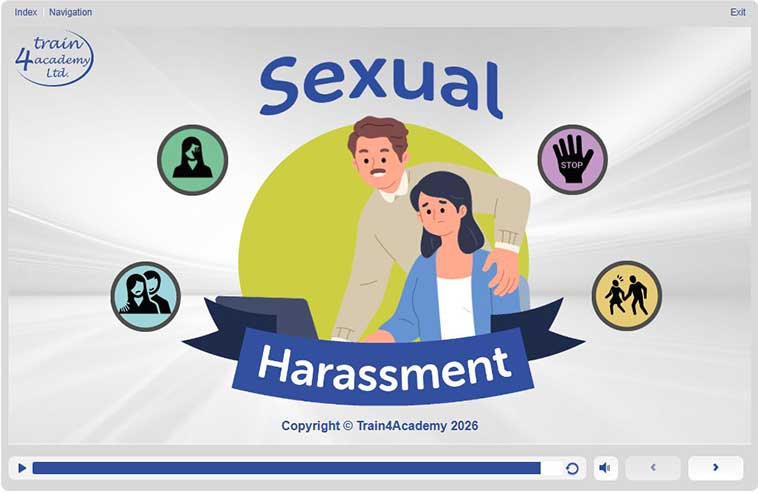
  • Sexual Harrassment Training for Managers & Employees - Introduction to Sexual Harassemnt Awareness
  • Sexual Harrassment Training for Managers & Employees - What is sexual harassment?
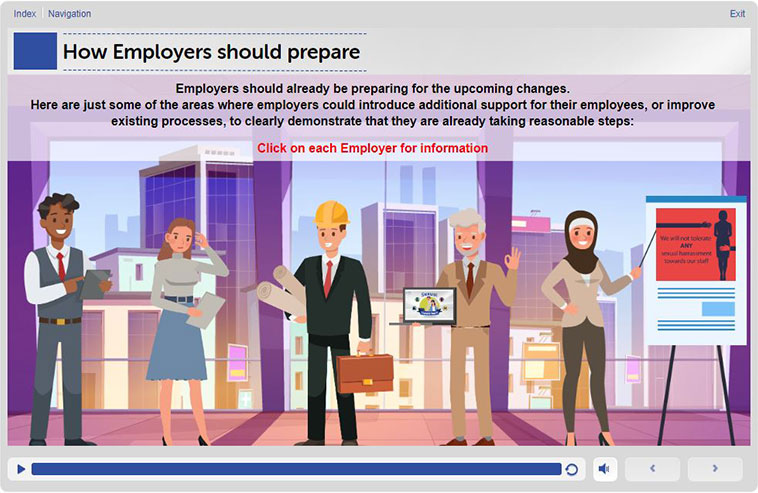
  • Sexual Harrassment Training for Managers & Employees - How employers should prepare


Course Aim

The aim of this course is to help individuals recognise behaviours that are classed as sexual harassment, understand what can be done to prevent this type of harassment occurring and how to report sexual harassment in the workplace.

In addition, the course also covers how the new Worker Protection Act 2023 places a new legal duty on employers to take a more pro-active approach in tackling Sexual Harassment in the Workplace along with what preventative measures can be put in place to protect workers.


Learning Objectives

On completion of this training, learners should be able to:

  • Identify what is classed as sexual harassment
  • List 3 categories of sexual harassment
  • List some behaviours of verbal sexual harassment
  • List some behaviours of nonverbal sexual harassment
  • List some behaviours of physical sexual harassment
  • Identify how the Equality Act 2010 helps to protect workers from sexual harassment
  • State some of the employer’s responsibilities
  • List 5 tips to help prevent sexual harassment
  • Identify how to report sexual harassment
  • Identify who to report sexual harassment to
  • Identify what Third-Party Sexual Harassment is
  • List who is classed as a Third-Party
  • Identify how the Worker Protection Act 2023 & Employment Rights Act 2025 places new duties on employers

Course Content

This training is made up of the following modules:

  • An Introduction to Sexual Harassment Training

    This section introduces the learner to the course. It looks at what sexual harassment is and behaviours or actions which could be classed as sexual harassment.

  • Module 1 - Types of Sexual Harassment

    This section covers the different types of sexual harassment, verbal, nonverbal and physical and the inappropriate or unwanted behaviours linked to each form of harassment.

  • Module 2 - Preventing Sexual Harassment

    This section covers the responsibilities of the employer, tips to help prevent sexual harassment and how the Equality Act 2010 covers sexual harassment.

  • Module 3 - Taking appropriate action

    This module explains how to recognise and report sexual harassment, the steps to take when concerns arise, and the legal responsibilities placed on employers under the Worker Protection (Amendment of Equality Act 2010) Act 2023 and the Employment Rights Act 2025.

Download Course Overview (PDF)

Assessment

On completion of the course lessons and training material an online assessment will automatically unlock. The assessment will contain 15 multiple-choice questions and a mark of 75% or above will be required to pass.

The assessment will be marked instantly and so you will know straight away if you have passed or not. If you don't pass first time there's no need to worry. Unlimited resits at absolutely no additional charge are available so you can retake the assessment again as many times as you need to.


Sexual Harassment Training Certification

Our entire library of training courses is accredited by the CPD Certification Service as adhering to the universally recognised Continuing Professional Development (CPD) guidelines.
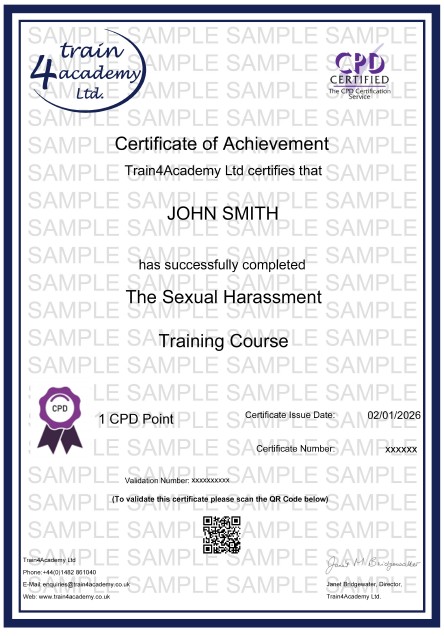
Sexual Harassment Training - Certificate Example

Upon passing the online assessment you will have the options to both print and download your Sexual Harassment Training Certificate in PDF format. In addition to this an automated email will also be sent to your chosen email address containing a link to your certificate ensuring you always have access to a copy.

Furthermore, a QR code is displayed on each certificate which when scanned by a smartphone links to our certification database. This allows employers, auditors and local authority inspectors, for example, to establish a certificates validity instantly and at any time.


Available in Multiple Languages

This training course includes machine generated translated content free of charge in the languages listed below:

  • Bulgarian, Hungarian, Latvian, Lithuanian
  • Polish, Portuguese, Romanian
  • Russian & Slovak

Please note: Course content which is not English may be machine translated and is made available for assistive purposes only. We cannot guarantee the accuracy of any translations.


Common Sexual Harassment Training Questions

While UK law does not specifically state that employers must provide sexual harassment training, employers have a legal duty to take reasonable steps to prevent sexual harassment in the workplace.


Providing sexual harassment training is widely recognised as one of the most effective ways to demonstrate that an organisation is taking reasonable steps to prevent inappropriate behaviour in the workplace.

Effective training helps employees:

  • Understand what constitutes sexual harassment and inappropriate conduct
  • Recognise the impact harassment can have on individuals and workplace culture
  • Understand how to report concerns and access support
  • Identify their responsibilities in maintaining a respectful working environment
  • Contribute to a safer, more inclusive workplace for everyone

Regular refresher training also helps organisations maintain awareness, reinforce expectations, and support ongoing compliance with workplace legislation and internal policies.

Sexual harassment is unwanted conduct of a sexual nature that has the purpose or effect of violating a person's dignity or creating an intimidating, hostile, degrading, humiliating or offensive environment. The behaviour can be a one-off incident or part of a pattern of behaviour.

Examples of workplace sexual harassment may include:

  • Unwanted touching or physical contact
  • Sexual comments, jokes, or innuendo
  • Displaying inappropriate or offensive images
  • Sending sexually suggestive emails, messages, or content
  • Making unwanted sexual advances
  • Repeatedly asking a colleague for dates after they have declined
  • Making comments about a person's appearance in a way that makes them uncomfortable
  • Sharing sexual content in the workplace or online work environments

Sexual harassment can occur between colleagues, managers and employees, customers and staff, or any individuals interacting within a work-related environment. It is important that employees understand how to recognise inappropriate behaviour and know how to respond if concerns arise.

The following scenarios illustrate situations that may constitute sexual harassment in the workplace. While every situation is unique, these scenarios show how inappropriate behaviour can occur in different working environments.


While there is no fixed legal requirement specifying how often sexual harassment training must be completed, employers are expected to take proactive steps to prevent sexual harassment in the workplace.

Many organisations provide training as part of employee induction and schedule regular refresher training to ensure employees understand their responsibilities, recognise inappropriate behaviour and know how to raise concerns.

Annual refresher training is commonly recommended, particularly for organisations operating in higher-risk environments or those with customer-facing roles. Additional training may also be appropriate following legislative changes, policy updates, workplace incidents, or organisational restructuring.

Regular training helps reinforce expectations, promotes a positive workplace culture, and demonstrates an ongoing commitment to preventing harassment.

Sexual harassment training should be completed by all employees, regardless of their role or seniority. Creating a safe and respectful workplace requires everyone to understand what constitutes inappropriate behaviour and how concerns should be addressed.

Audience Benefit
Employees Understand what sexual harassment is, how to recognise inappropriate behaviour, how to report concerns and how to contribute to a respectful workplace.[J
Managers and supervisors May need additional training because they are often responsible for handling complaints, supporting employees, and implementing workplace policies.
Directors and senior leaders Play an important role in setting expectations, leading by example, and promoting a culture of dignity and respect.
Temporary workers and contractors Should understand the same workplace standards where they work alongside employees or represent the organisation.

Many organisations also extend sexual harassment awareness training to contractors, agency workers, volunteers and other third parties where appropriate, helping to create consistent expectations across the workplace.

Yes. Sexual harassment can occur in any work-related environment, including remote and hybrid workplaces. The same standards of behaviour apply whether employees are interacting face-to-face or through digital communication platforms.

Examples of online sexual harassment include:

  • Sending inappropriate emails, messages, or images
  • Sharing offensive or sexually explicit content
  • Making unwanted comments during video meetings
  • Sending repeated unwanted personal or sexual communications outside working hours
  • Using instant messaging platforms to make inappropriate advances
  • Creating an intimidating, uncomfortable, or hostile online environment

As remote and hybrid working become more common, organisations should ensure employees understand that workplace policies apply equally to emails, instant messaging platforms, video conferencing tools, and other forms of digital communication. Training helps employees recognise inappropriate behaviour and understand how to report concerns if they occur.


The Importance of Sexual Harassment Training


Sexual harassment training plays an important role in helping organisations create safe, respectful and inclusive workplaces. By educating employees about appropriate behaviour, reporting procedures and individual responsibilities, organisations can help reduce the risk of harassment occurring and respond more effectively when concerns are raised.


Organisations that provide regular sexual harassment training can benefit by:

  • Helping employees recognise inappropriate behaviour
  • Encouraging early reporting of concerns
  • Promoting a respectful and inclusive workplace culture
  • Supporting managers when handling complaints appropriately
  • Demonstrating a commitment to employee wellbeing and legal compliance

Regular refresher training also reinforces organisational values, keeps employees informed about changes in legislation or workplace policies, and helps maintain awareness across the workforce.

Sexual harassment is not always committed by colleagues. Employees may also experience inappropriate behaviour from customers, clients, contractors, visitors, suppliers, or members of the public while carrying out their work.


Examples of third-party sexual harassment may include:

  • Inappropriate comments from customers
  • Unwanted physical contact from visitors
  • Sexual jokes or remarks made by contractors
  • Persistent unwanted advances from clients
  • Sharing inappropriate material during meetings or business events

Organisations can help reduce these risks by providing training, encouraging employees to report concerns promptly, implementing clear reporting procedures, and supporting staff whenever inappropriate behaviour occurs, regardless of who is responsible.

Every workplace is different, and the risk of sexual harassment can vary depending on the working environment, organisational culture, and the nature of employees' roles. Identifying potential risks allows organisations to introduce appropriate preventative measures before problems arise.

Some workplace situations may present a higher risk of sexual harassment, including:

  • Customer-facing roles - Employees who regularly interact with customers or members of the public may encounter inappropriate behaviour.
  • Lone working - Working without colleagues nearby can make it more difficult to seek immediate support.
  • Night shifts - Reduced staffing levels or isolated working environments may increase risk.
  • Work-related social events - Informal settings involving alcohol can sometimes blur professional boundaries.
  • Remote & hybrid working - Digital communication platforms can also become channels for inappropriate behaviour.
  • Power imbalances - Differences in seniority or authority may discourage employees from speaking up.

By regularly reviewing workplace practices, encouraging open communication, and providing effective training, organisations can identify potential risks early and help create a safer environment for everyone.

Preventing sexual harassment is a shared responsibility. Employees who witness inappropriate behaviour can play an important role in helping to create a respectful workplace by recognising concerns, supporting colleagues, and reporting issues through the appropriate channels.

Active bystanders can help by:

  • Challenging inappropriate behaviour where it is safe to do so
  • Supporting colleagues who may have experienced harassment
  • Reporting concerns through workplace procedures
  • Encouraging others to speak up
  • Helping promote a positive and respectful workplace culture

Sexual harassment training helps employees understand how to respond appropriately while recognising that every situation is different. Individuals should always consider their own safety and follow their organisation's reporting procedures.

A positive workplace culture is built on dignity, respect, inclusion, and professional behaviour. When employees understand what is expected of them and feel confident raising concerns, organisations are better placed to help prevent inappropriate behaviour before it becomes a more serious issue.

A respectful workplace culture encourages employees to:

  • Treat colleagues with dignity and respect
  • Value diversity and inclusion
  • Communicate professionally
  • Challenge inappropriate behaviour
  • Support colleagues who raise concerns
  • Follow workplace policies and procedures

Creating a respectful workplace is an ongoing process. Alongside clear policies and regular training, organisations should encourage open communication, lead by example, and regularly review their approach to help maintain a safe working environment.


Course Reviews

4.7.

(214 reviews)

Read more reviews


Related Online Training Courses

  • cert
    Bullying and Harassment

    £25.00 +VAT

    A definition of bullying and harassment at work is "unwanted behaviour that makes someone feel intimidated, humiliated or offended." Could this happen in your workplace? This online training course looks at all aspects of bullying and harassment at work and will help identify where your organisation is falling short or could improve..

  • cert
    Equality and Diversity

    £25.00 +VAT

    The Equality Act 2010 protects people from discrimination in the workplace and the wider society. It identified the nine protected categories, such as age, disability, becoming a transexual, marriage or civil partnership, race, religion, sex or sexual orientation.

Sexual Harassment Training CPD Certified Course

4.7 (214 reviews)

£25.00 +VAT per person

Discounts on bulk purchases
  • 10% Discount 10+ courses
  • 20% Discount 20+ courses
  • 30% Discount 50+ courses
  • 40% Discount 75+ courses
  • 50% Discount 100+ courses
  • Compare plans & pricing

Training 10 or more people? Let us quote you

Training Management Suite (TMS) included
with orders of 5 or more courses.

Course information
  • Certificate on Successful Completion
  • Machine Translated Content Available for 9 Languages
  • Access course on Desktop, Laptop or Tablet
  • 15 Multiple Choice Questions
  • Course Duration: 30 Minutes
  • CPD Points: 1


Frequently Asked Questions

Our training is completed online, using only a web browser.

After choosing the courses and completing the online transaction, you'll recieve an email providing access to the course. Use the details to register the course yourself or if it's for someone else, simply forward the email on.

Purchasing training for your team is simple.

Just add the courses you need to your basket and complete the checkout process. If you're purchasing 5 or more courses, we'll provide you with access to our Training Management System (TMS).

The TMS gives you full control over your learners, allowing you to enrol staff, monitor progress, track completion rates, and download certificates.

Once your account is set up, we're happy to show you around the system and help you get the most from its features. If you have any questions, our support team is always here to help at support@train4academy.co.uk.

Yes. We offer automatic discounts on larger orders, and any applicable discount will be applied instantly at checkout across all courses in the basket.

Depending on the number of courses purchased we provide the following discounts below. If you're looking to purchase a higher volume, please contact us and we'll be happy to discuss additional volume discounts.

  • Purchase 10+ courses and recieve 10%
  • Purchase 20+ courses and recieve 20%
  • Purchase 50+ courses and recieve 30%
  • Purchase 75+ courses and recieve 40%
  • Purchase 100+ courses and recieve 50%

Our training can be purchased easily using a debit or credit card.

If you're purchasing a larger volume of training and would prefer to be invoiced, please contact us on 01482 861 040 or email enquiries@train4academy.co.uk.

Our training is designed to fit around your schedule. Everybody receives 2 years from date of purchase, so there's no rush to complete your training course.

You can work through the training at your own pace, pause whenever you need to, and return whenever it's convenient. Your progress is automatically saved, allowing you to pick up exactly where you left off.

Even after you've successfully passed the assessment, you'll still be able to access the training materials whenever you need to refresh your knowledge

Read further FAQ