Basket 0 item(s) £0.00 + VAT
Call Us 01482 861 040

Prepare for the Key Changes Coming in October 2026 with our Sexual Harassment Awareness Training Course

Spill Prevention and Control Training

4.7 (24 reviews)
Identify a spill and the key steps of a spill response RoSPA Assured

Unlimited Resits Customer Support Instant Access

£25.00 +VAT per person

Course information
  • Certificate on Successful Completion
  • Access course on Desktop, Laptop or Tablet
  • 15 Multiple Choice Questions
  • Course Duration: 30 Minutes
  • CPD Points: 1

This Spill Prevention and Control Training course looks at raising awareness on how to prevent or handle spills. Preventing spills, especially in the manufacturing industry, is not always possible. However, spillages and leaks must be dealt with promptly as soon as they occur. When not dealt with quickly, spillages can be serious and may cause serious accidents, especially if it is a dangerous substance that has been spilt.

Storage tanks must have a system for containing any leaks that may happen, and it is advised for all areas to have a readily available “spill kit” and trained staff to deal with such events.

This course looks at how to handle storage in a safe manner, as well as the repercussions that dealing with hazardous chemicals may have.

  • Work towards compliance with UK Health and Safety legislation
  • Train online at your own pace with a full audio voiceover
  • Assured by RoSPA & Accredited by CPD
  • Certificate on successful completion
  • Course duration: 30 minutes
  • Unlimited resits at no cost

Discounts on Bulk Purchases

Take advantage of our bulk discounts which will reduce your overall cost of training. Better still, any courses you order can be registered to users upto two years later so there's no need to worry about training credits expiring.

Courses Purchased Discount
10+ 10%
20+ 20%
50+ 30%
75+ 40%
100+ 50%


Who is this online Spill Prevention and Control Training for?

This course is ideal for both employers and employees as it raises awareness of what to do if a spill occurs and how to deal with it quickly and safely. It also looks at preventive measures that both employers and employees can take to prevent spills from happening.


Course Screenshots
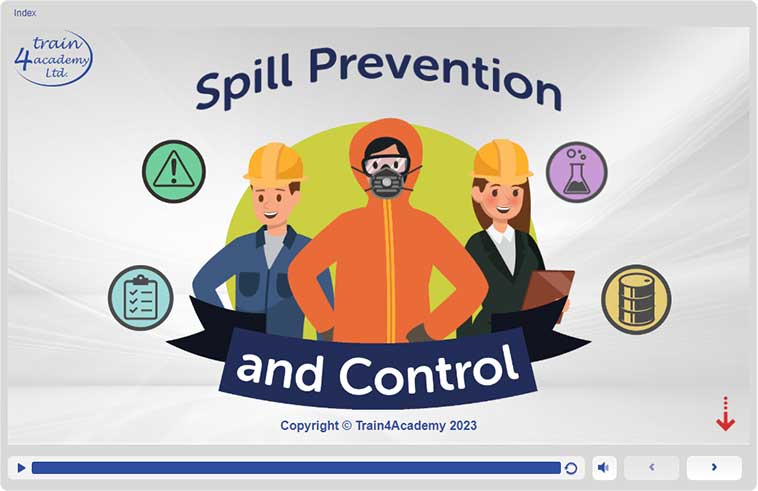
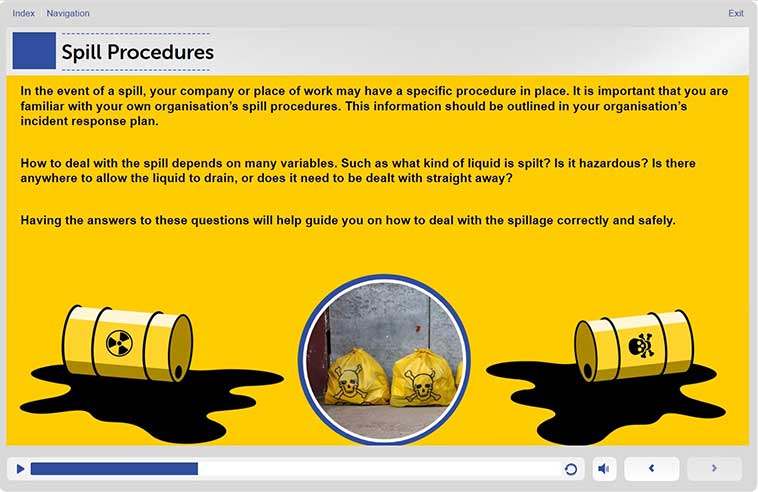
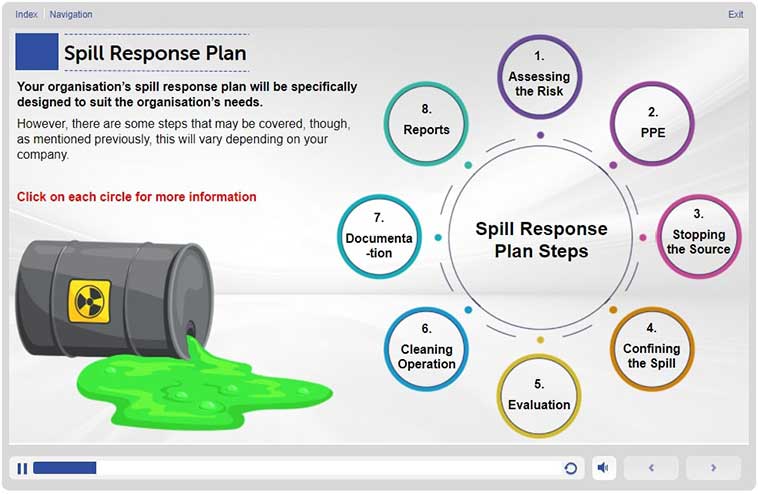
  • Spill Prevention - Welcome to the course
  • Spill Prevention - Spill Kit and Prevention
  • Spill Prevention - Reducing the number of hazards

Course Aim

The aim of this course is to raise awareness of spills and how these incidents can be prevented via various methods. It also looks at the dangers of spilt hazardous substances and the roles and responsibilities that both employees and employers hold when it comes to dealing with spills.


Learning Objectives

On completion of the course, you should be able to:

  • Identify how spills may occur
  • List some storage types
  • Name some substances hazardous to health
  • List some types of PPE
  • Identify some steps that can be taken during a spill response plan
  • List some types of spill kits and their uses
  • Identify the duties that should be upheld by both the employer and employee
  • Identify the purpose of a safety data sheet
  • Identify some repercussions that may occur if coming into contact with hazardous substances
  • List the five steps that should be undertaken in a risk assessment
  • Recognise the GHS hazard symbols

Course Content

This course is made up of the following modules:

  • An Introduction to Spill Prevention

    This section introduces the learner to the course and looks at how spills may occur.

  • Module 1 - Hazardous Substances

    This section of the course concentrates on the different types of hazardous substances, the different GHS hazard symbols and why the use of a safety data sheet is important, especially when dealing with chemical spills.

  • Module 2 - How to Deal with a Spill Safely

    This section of the course covers how to deal with a spill safely. It looks at the general steps of a spill response plan and the different types of spill kits that may be used. It also looks at how to dispose of waste safely.

  • Module 3 - Roles and Responsibilities

    This final section explores the roles and responsibilities that both employees and employers hold. It is important that every individual upholds their own responsibilities to ensure that when dealing with spills, especially hazardous ones, every person’s health is protected from harm.

Download Course Overview (PDF)

Assessment

On completion of the course lessons and training material an online assessment will automatically unlock. The assessment will contain 15 multiple-choice questions and a mark of 75% or above will be required to pass.

The assessment will be marked instantly and so you will know straight away if you have passed or not. If you don't pass first time there's no need to worry. Unlimited resits at absolutely no additional charge are available so you can retake the assessment again as many times as you need to.


Spill Prevention and Control Training Certification

Our entire library of training courses is accredited by the CPD Certification Service as adhering to the universally recognised Continuing Professional Development (CPD) guidelines.

This training course and its content has also been assured by RoSPA, the Royal Society for the Prevention of Accidents.
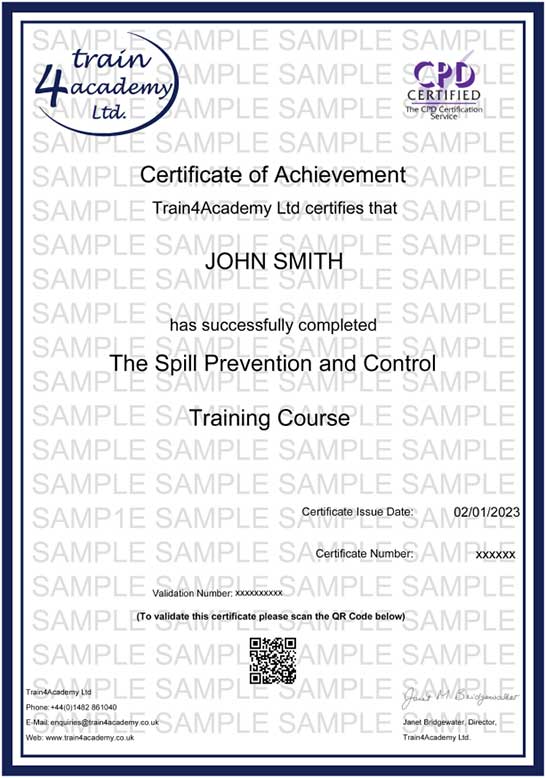
Spill Prevention & Control Certificate

Upon passing the online assessment you will have the options to both print and download your Spill Prevention & Control Training Certificate in PDF format. In addition to this an automated email will also be sent to your chosen email address containing a link to your certificate ensuring you always have access to a copy.

Furthermore, a QR code is displayed on each certificate which when scanned by a smartphone links to our certification database. This allows employers, auditors and local authority inspectors, for example, to establish a certificates validity instantly and at any time.


Common Spill Prevention Training Questions

Spill prevention is the process of reducing the risk of accidental releases of oils, fuels, chemicals and other hazardous substances that could harm people, property or the environment. It combines safe working practices, proper storage, regular equipment inspections and employee training to help prevent spills before they occur. By taking a proactive approach, organisations can minimise workplace hazards, avoid costly clean-up operations and reduce the risk of environmental pollution.

Effective spill prevention involves more than simply having spill kits available. It requires employees to recognise potential hazards, understand how spills can occur and follow established procedures to prevent incidents from happening in the first place.

Key elements of an effective spill prevention programme include:

  • Identifying spill hazards through workplace risk assessments.
  • Storing hazardous substances safely in suitable containers and designated storage areas.
  • Inspecting equipment regularly to identify leaks, damaged containers or failing components.
  • Using appropriate spill control equipment, including the correct spill kits for different substances.
  • Training employees to prevent, contain and report spills safely.
  • Following emergency procedures to minimise the impact of any accidental release.

By combining prevention, preparedness and employee awareness, organisations can create a safer workplace, protect the environment and support compliance with UK health and safety and environmental legislation.

Spill prevention training is suitable for anyone who works with oils, fuels, chemicals or other hazardous substances that could cause harm to people or the environment if accidentally released. While every workplace is different, employers have a responsibility to ensure staff understand how to prevent spills, respond safely and minimise the impact of an incident.

Employees who may benefit from spill prevention training include:

Job Roles That Benefit from Spill Prevention and Control Training
Job Role Why Training is Important
Warehouse Operatives Handle stored chemicals, oils and liquids safely.
Maintenance Engineers Prevent spills during servicing and repairs.
Manufacturing Staff Reduce the risk of leaks during production processes.
Construction Workers Manage fuels, lubricants and hydraulic fluids safely.
Facilities & Site Managers Ensure spill procedures and equipment are in place.
Environmental & Health & Safety Personnel Support compliance and environmental protection.

Regardless of industry, spill prevention training helps employees recognise potential hazards, use spill kits correctly, follow emergency procedures and protect both colleagues and the surrounding environment.

There is no fixed legal requirement that specifies how often spill prevention training must be renewed. However, employers should ensure employees receive refresher training whenever it is necessary to maintain competence and comply with their health and safety responsibilities.

Refresher training is recommended:

  • Annually as part of ongoing health and safety awareness.
  • When new hazardous substances are introduced.
  • Following changes to workplace procedures.
  • After purchasing new spill control equipment.
  • After a significant spill or near miss.
  • When employees change roles or responsibilities.

Regular refresher training helps ensure staff remain familiar with emergency procedures, understand any changes to legislation or company policies and continue to respond confidently should a spill occur.

Workplace spills can involve a wide range of substances, each presenting different safety and environmental risks. Spill prevention training helps employees understand how to identify the type of spill, assess the risks involved and use the appropriate response methods.

Common spills covered include:

Common Types of Spills
Spill Type Examples
Oil Spills Engine oil, lubricants, hydraulic oil.
Fuel Spills Diesel, petrol, kerosene.
Chemical Spills Acids, alkalis, solvents and cleaning chemicals.
Coolants Industrial coolants and antifreeze.
Hazardous Liquids Corrosive or toxic substances used in manufacturing.
Other Liquid Contaminants Waste liquids, paints and process chemicals.

Training also explains how different spill kits are designed for specific substances, ensuring the correct absorbents and containment methods are used to reduce the risk of injury and environmental contamination.

Spill prevention training is about far more than cleaning up accidental spills. It helps organisations prevent incidents from occurring in the first place while ensuring employees know how to respond quickly, safely and effectively if a spill does happen.

Effective spill prevention training helps organisations:

  • Protect employees from slips, chemical exposure and other workplace hazards.
  • Prevent pollution of drains, watercourses and surrounding land.
  • Reduce the cost of clean-up operations and lost productivity.
  • Support compliance with UK health and safety and environmental legislation.
  • Protect company property, equipment and business reputation.
  • Improve confidence when responding to emergency situations.

By providing employees with the knowledge to prevent, contain and report spills correctly, organisations can reduce environmental impact, improve workplace safety and demonstrate a proactive commitment to responsible risk management.


Why Spill Prevention Matters

Accidental spills can create serious workplace hazards, putting employees, contractors and visitors at risk of injury or illness. Whether a spill involves oil, fuel, chemicals or another hazardous substance, a quick and informed response is essential to minimise the risk of harm. Effective spill prevention helps organisations create a safer working environment by reducing the likelihood of incidents occurring in the first place.

Workplace spills can lead to a range of hazards, including:

  • Slips, trips and falls caused by spilled liquids on floors or walkways.
  • Chemical exposure through skin contact, inhalation or accidental ingestion.
  • Fire and explosion risks where flammable liquids are involved.
  • Equipment damage caused by leaks affecting machinery or electrical systems.
  • Cross-contamination of work areas, products or materials.

By providing employees with spill prevention training, organisations can improve hazard awareness, encourage safe working practices and ensure staff know how to respond quickly and effectively if a spill occurs. This helps protect both people and property while reducing the likelihood of workplace accidents.

Even a relatively small spill can have significant environmental consequences if hazardous substances enter surface water drains, rivers, soil or groundwater. Spill prevention plays an important role in protecting the environment by reducing the risk of pollutants being released into surrounding ecosystems.

Common environmental risks associated with workplace spills include:

  • Contamination of rivers, streams and watercourses.
  • Pollution of soil and groundwater.
  • Harm to wildlife and natural habitats.
  • Damage to local ecosystems.
  • Increased clean-up costs and environmental remediation.

Preventing pollution begins with good planning. Safe storage of hazardous substances, routine inspections, well-maintained equipment and readily available spill control equipment all help reduce the likelihood of environmental incidents. Equally important is ensuring employees understand how to contain and report spills before they spread beyond the immediate area.

By taking a proactive approach to spill prevention, organisations can help protect natural resources, reduce environmental impact and demonstrate responsible environmental management

Employers have a legal duty to protect employees, the public and the environment from the risks associated with hazardous substances. While legislation does not prescribe a single approach to spill prevention, organisations are expected to implement suitable control measures, provide appropriate training and have procedures in place to deal with accidental spills.

Spill prevention training supports compliance with key legislation, including:

  • Health and Safety at Work etc. Act 1974 – promoting safe systems of work.
  • Control of Substances Hazardous to Health (COSHH) Regulations – controlling exposure to hazardous substances.
  • Environmental Protection Act 1990 – protecting land and water from pollution.
  • Hazardous Waste Regulations – ensuring contaminated materials are handled and disposed of correctly.

Providing employees with spill prevention training demonstrates a proactive commitment to managing workplace risks while helping organisations meet their legal responsibilities and reduce the likelihood of enforcement action.

Workplace spills can be expensive. Beyond the immediate clean-up costs, organisations may experience production delays, equipment damage, environmental remediation expenses and potential regulatory action. Investing in spill prevention is often far more cost-effective than dealing with the consequences of an avoidable incident.

Effective spill prevention can help organisations reduce:

How Spill Prevention Reduces Business Costs
Potential Cost How Spill Prevention Helps
Clean-up Costs Reduces the likelihood and severity of spills.
Production Downtime Minimises disruption to normal operations.
Equipment Repairs Prevents damage caused by leaks and contamination.
Environmental Remediation Reduces pollution incidents requiring specialist clean-up.
Legal and Regulatory Costs Supports compliance with health, safety and environmental legislation.

Training employees to identify hazards, follow safe working practices and respond quickly to spills helps businesses protect their operations, minimise financial losses and maintain productivity.

A strong safety culture encourages everyone within an organisation to take responsibility for preventing accidents and protecting the workplace. Spill prevention forms an important part of this culture by promoting awareness, accountability and continuous improvement across all levels of the business.

Organisations with a positive safety culture typically encourage employees to:

  • Report leaks, damaged containers and potential hazards promptly.
  • Follow safe storage and handling procedures.
  • Carry out regular workplace inspections.
  • Use spill kits and emergency equipment correctly.
  • Participate in refresher training and ongoing safety initiatives.
  • Learn from incidents and near misses to prevent future occurrences.

When spill prevention becomes part of everyday working practices rather than simply a compliance requirement, employees are more likely to identify risks early, respond confidently to incidents and contribute to a safer, more environmentally responsible workplace.


Course Reviews

4.7.

(24 reviews)

Read more reviews


Related Online Training Courses

  • cert
    Slips, Trips and Falls (Understanding)

    £25.00 +VAT

    HSE Slips and falls are, according to HSE statistics, responsible for 40% of all accidents reported under RIDDOR. Simple falls can cause serious injuries. This course will highlight the causes of these accidents, which, can usually be preventable. An important course for all in any workplace..

  • cert
    Accident Reporting (RIDDOR)

    £25.00 +VAT

    The reporting of Injuries, Diseases and Dangerous Occurrences Regulations 2013, puts the responsibilities for reporting accidents in the workplace onto the “responsible person”, usually owners, managers and supervisors in the smaller companies..

Identify a spill and the key steps of a spill response RoSPA Assured

4.7 (24 reviews)

£25.00 +VAT per person

Discounts on bulk purchases
  • 10% Discount 10+ courses
  • 20% Discount 20+ courses
  • 30% Discount 50+ courses
  • 40% Discount 75+ courses
  • 50% Discount 100+ courses
  • Compare plans & pricing

Training 10 or more people? Let us quote you

Training Management Suite (TMS) included
with orders of 5 or more courses.

Course information
  • Certificate on Successful Completion
  • Access course on Desktop, Laptop or Tablet
  • 15 Multiple Choice Questions
  • Course Duration: 30 Minutes
  • CPD Points: 1

Frequently Asked Questions

Our training is completed online, using only a web browser.

After choosing the courses and completing the online transaction, you'll recieve an email providing access to the course. Use the details to register the course yourself or if it's for someone else, simply forward the email on.

Purchasing training for your team is simple.

Just add the courses you need to your basket and complete the checkout process. If you're purchasing 5 or more courses, we'll provide you with access to our Training Management System (TMS).

The TMS gives you full control over your learners, allowing you to enrol staff, monitor progress, track completion rates, and download certificates.

Once your account is set up, we're happy to show you around the system and help you get the most from its features. If you have any questions, our support team is always here to help at support@train4academy.co.uk.

Yes. We offer automatic discounts on larger orders, and any applicable discount will be applied instantly at checkout across all courses in the basket.

Depending on the number of courses purchased we provide the following discounts below. If you're looking to purchase a higher volume, please contact us and we'll be happy to discuss additional volume discounts.

  • Purchase 10+ courses and recieve 10%
  • Purchase 20+ courses and recieve 20%
  • Purchase 50+ courses and recieve 30%
  • Purchase 75+ courses and recieve 40%
  • Purchase 100+ courses and recieve 50%

Our training can be purchased easily using a debit or credit card.

If you're purchasing a larger volume of training and would prefer to be invoiced, please contact us on 01482 861 040 or email enquiries@train4academy.co.uk.

Our training is designed to fit around your schedule. Everybody receives 2 years from date of purchase, so there's no rush to complete your training course.

You can work through the training at your own pace, pause whenever you need to, and return whenever it's convenient. Your progress is automatically saved, allowing you to pick up exactly where you left off.

Even after you've successfully passed the assessment, you'll still be able to access the training materials whenever you need to refresh your knowledge

Read further FAQ