Basket 0 item(s) £0.00 + VAT
Call Us 01482 861 040

Prepare for the Key Changes Coming in October 2026 with our Sexual Harassment Awareness Training Course

Energy Efficiency Training Course

4.7 (151 reviews)
Energy Efficiency for staff Course CPD Certified Course

Unlimited Resits Customer Support Instant Access

£25.00 +VAT per person

Course information
  • Certificate on Successful Completion
  • Access course on Desktop, Laptop or Tablet
  • 15 Multiple Choice Questions
  • Course Duration: 30 Minutes
  • CPD Points: 1

This online Energy Efficiency in the Workplace Training course will help you know how better to use electrical devices by making you aware of the energy waste.

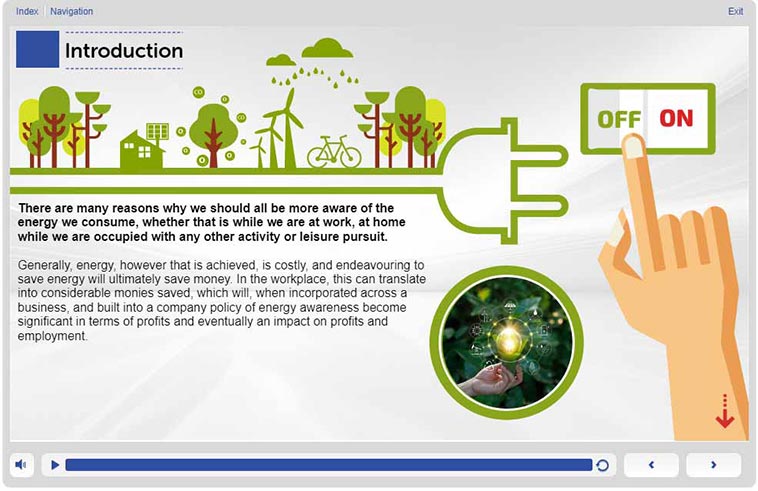
There are many reasons why we should all be more aware of the energy we consume, whether that is while we are at work, at home while we are occupied with any other activity or leisure pursuit. In the workplace, this can translate into considerable monies saved, which will, when incorporated across a business, and built into a company policy of energy awareness become significant in terms of profits and eventually an impact on profits and employment.

This course raises awareness on how energy saving is important and what measures can be taken to ensure that employees and managers are practising energy-saving where practicable.


Discounts on Bulk Purchases

Take advantage of our bulk discounts which will reduce your overall cost of training. Better still, any courses you order can be registered to users upto two years later so there's no need to worry about training credits expiring.

Courses Purchased Discount
10+ 10%
20+ 20%
50+ 30%
75+ 40%
100+ 50%


  • Train online at your own pace with a full audio voiceover
  • Accredited by CPD
  • Certificate on successful completion
  • Course duration: 30 minutes
  • Unlimited resits at no cost

Who is this Online Energy Efficiency Training for?

This course is ideal for anyone working within an office environment or a workplace that accesses a lot of energy, via lights, computers, or other energy-consuming appliances.


Course Screenshots

  • Welcome Screen - Energy Efficiency in the Workplace Training Course
  • Introduction - Energy Efficiency in the Workplace Training Course
  • Adapting Workpace Behaviour - Energy Efficiency in the Workplace Training Course


Course Aim

This course aims to provide you with the knowledge of what energy efficiency is, how it affects the environment and how everyone can make a positive impact on climate change. You will be able to recognise how businesses and individuals can make changes to help energy efficiency within the workplace.


Learning Objectives

On completion of the course, you should be able to:

  • Identify the benefits of energy efficiency
  • Identify the impact of climate change on the world
  • List different ways of producing energy
  • Identify what we use energy for
  • Differentiate between energy efficiency and energy conservation
  • List some examples of energy efficiency
  • List some energy saving techniques for heating and electric
  • Identify different central heating methods
  • Identify the different types of lightbulbs available
  • List some energy-efficient installations
  • Identify what employees can do to energy save
  • Identify how to adapt workplace behaviour for better
  • Identify how employers can raise awareness of energy saving

Course Content

This course is made up of the following modules:

  • An Introduction to Energy Efficiency in the Workplace

    This section introduces the learner to the course. It shows how saving energy equally saves money which is beneficial both for the environment and for business.

  • Module 1 - Protecting the Planet

    This section of the course concentrates saving energy can help to protect the planet and reduce the contribution to global warming.

  • Module 2 - Where Energy Efficiency Starts

    This section of the course covers how energy efficiency should be implemented throughout the new building process, ensuring that measures are taken to make a building more energy-efficient, for example, adding insulation or adapting energy-efficient heating choices.

  • Module 3 - Energy Saving for Employees

    In this final section, you will cover energy saving in further detail, such as how to save energy in the workplace and at home. It looks specifically at how to save heating energy and electric energy by giving you tips and advice that can be implemented daily. It also looks at energy saving lightbulbs and different heating systems, such as renewable energy central heating.

Download Course Overview (PDF)

Assessment

On completion of the course lessons and training material an online assessment will automatically unlock. The assessment will contain 15 multiple-choice questions and a mark of 75% or above will be required to pass.

The assessment will be marked instantly and so you will know straight away if you have passed or not. If you don't pass first time there's no need to worry. Unlimited resits at absolutely no additional charge are available so you can retake the assessment again as many times as you need to.


Energy Efficiency Training Certification

Our entire library of training courses is accredited by the CPD Certification Service as adhering to the universally recognised Continuing Professional Development (CPD) guidelines.
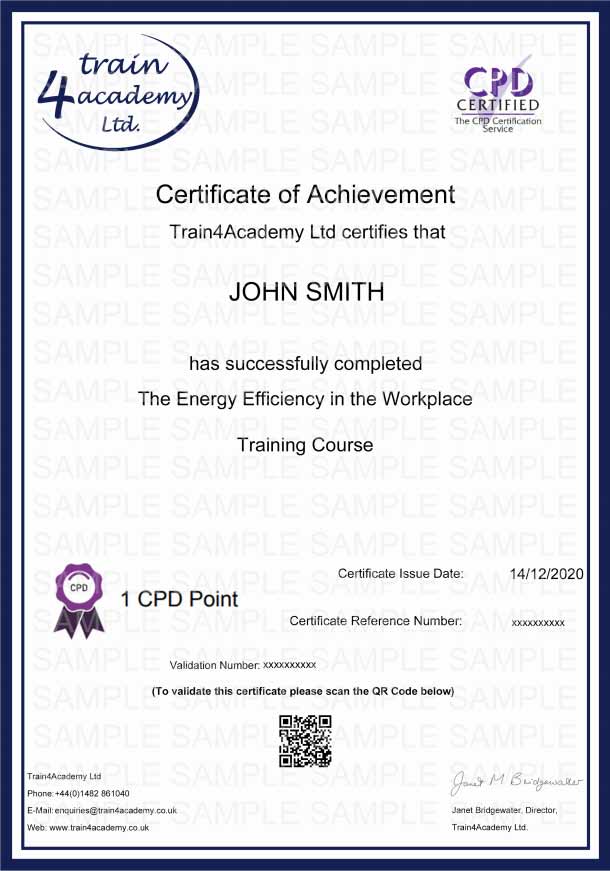
energy-efficiency Training - Certificate Example

Upon passing the online assessment you will have the options to both print and download your Energy Efficiency Training Certificate in PDF format. In addition to this an automated email will also be sent to your chosen email address containing a link to your certificate ensuring you always have access to a copy.

Furthermore, a QR code is displayed on each certificate which when scanned by a smartphone links to our certification database. This allows employers, auditors and local authority inspectors, for example, to establish a certificates validity instantly and at any time.


Common Energy Efficiency Training Questions

Energy efficiency is the practice of using less energy to achieve the same result. Rather than reducing productivity or comfort, it focuses on eliminating unnecessary energy waste by using energy more effectively.

In the workplace, energy efficiency can be achieved through a combination of modern equipment, well-maintained building systems and everyday employee behaviours. Simple actions such as switching off unused lights, shutting down computers at the end of the day and using heating and air conditioning responsibly can all contribute to lower energy consumption.

Examples of Improving Energy Efficiency
Example How It Improves Energy Efficiency
LED Lighting Uses significantly less electricity than traditional lighting while providing the same level of illumination.
Energy-Efficient Equipment Modern appliances and machinery consume less energy to perform the same tasks.
Heating and Cooling Controls Programmable thermostats and sensible temperature settings help prevent unnecessary energy use.
Switching Off Unused Equipment Reduces electricity consumption by ensuring devices are not left running when they are no longer needed.
Building Insulation Helps retain heat during colder months and keeps buildings cooler in warmer weather, reducing heating and cooling demands.

Improving energy efficiency benefits both organisations and the environment. By reducing unnecessary energy consumption, businesses can lower operating costs, decrease carbon emissions and support wider sustainability goals. While technology plays an important role, employee awareness and everyday workplace habits are equally important in creating a more energy-efficient organisation.

Energy efficiency training helps employees understand how to use energy more responsibly in the workplace. It teaches practical ways to reduce unnecessary energy consumption, lower operating costs and minimise environmental impact without affecting productivity or safety.

Rather than focusing solely on technical equipment, energy efficiency training encourages everyday behaviours that can make a significant difference. Small actions, when adopted across an entire organisation, can lead to meaningful energy savings over time.

Energy Efficiency Training Topics
Topic What You'll Learn
Energy Awareness Understanding how energy is used in the workplace.
Electricity Saving Identifying unnecessary energy use and reducing waste.
Heating and Lighting Using heating, cooling and lighting systems efficiently.
Workplace Behaviours Developing energy-saving habits during day-to-day tasks.
Sustainability Understanding how efficient energy use supports environmental goals.

Whether you work in an office, warehouse, retail environment or industrial setting, energy efficiency training provides practical knowledge that helps individuals contribute to a more sustainable and cost-effective workplace.

Energy efficiency is everyone's responsibility, which is why this type of training is suitable for employees at every level of an organisation. While facilities managers and maintenance teams may oversee building systems, everyday staff also play an important role in reducing unnecessary energy use.

Energy efficiency training is particularly beneficial for:

  • Office employees
  • Warehouse and distribution staff
  • Retail workers
  • Manufacturing operatives
  • <
  • Supervisors and team leaders
  • Facilities and maintenance teams
  • Managers responsible for sustainability initiatives

Regardless of job role, employees make decisions every day that affect energy consumption. Turning off unused equipment, using heating and lighting efficiently, and recognising opportunities to reduce waste are simple actions that collectively make a significant impact.

Providing energy efficiency training across the workforce also helps create a shared understanding of good environmental practices, encouraging consistent behaviours that support both business objectives and wider sustainability goals.

Using energy efficiently benefits both organisations and the environment. Every workplace relies on electricity, heating, lighting and equipment to operate, but unnecessary energy use can increase operating costs and contribute to avoidable carbon emissions.

By improving energy awareness, businesses can reduce waste without compromising productivity. Employees who understand how their daily actions influence energy consumption are better equipped to make simple changes that improve overall efficiency.

Benefits of Improving Energy Efficiency
Benefit How It Helps
Lower Energy Costs Reduces unnecessary electricity and heating expenses.
Reduced Carbon Emissions Supports environmental sustainability and carbon reduction efforts.
Improved Resource Management Encourages efficient use of workplace equipment and facilities.
Employee Awareness Promotes responsible energy-saving behaviours throughout the organisation.
Sustainability Goals Helps businesses support environmental policies and long-term objectives.

Energy efficiency isn't about making drastic changes—it's about developing practical habits that reduce waste wherever possible. When employees understand why energy matters and how they can contribute, organisations are better positioned to improve efficiency, reduce costs and build a more sustainable workplace.


Why Energy Efficiency Matters

Energy is one of the largest operating expenses for many organisations. Whether it's powering computers in an office, lighting a warehouse or running manufacturing equipment, unnecessary energy consumption can quickly increase overheads and reduce profitability.

Improving energy efficiency doesn't always require major investment. In many workplaces, simple behavioural changes can make a noticeable difference. Employees who understand how their actions affect energy use are more likely to switch off unused equipment, report faults, use heating and cooling responsibly and avoid unnecessary waste.

Some common ways businesses reduce energy costs include:

Energy-Saving Measures and Their Potential Benefits
Energy-Saving Measure Potential Benefit
Switching Off Lights in Unused Areas Reduces unnecessary electricity consumption.
Shutting Down Computers and Equipment Prevents energy being used outside working hours.
Using Programmable Heating Controls Avoids heating or cooling empty buildings.
Maintaining Equipment Well-maintained systems often operate more efficiently.
Employee Awareness Training Encourages consistent energy-saving behaviours across the workforce.

While technology can improve efficiency, lasting savings often come from creating good workplace habits. Energy efficiency training helps employees recognise where energy is being wasted and gives them the knowledge to make informed decisions that benefit both the organisation and the environment.

Every organisation consumes energy, and much of that energy is still generated from sources that produce greenhouse gas emissions. By reducing unnecessary energy use, businesses can lower their carbon footprint while supporting wider environmental and sustainability objectives.

Energy efficiency is often one of the simplest and most cost-effective ways to reduce carbon emissions. Unlike investing in new infrastructure, improving energy efficiency focuses on making better use of the energy already being consumed.

Examples of carbon-reducing workplace behaviours include:

  • Switching off equipment when it is not in use.
  • Using lighting only where it is needed.
  • Reporting faults such as leaking compressed air systems or defective heating controls.
  • Avoiding unnecessary heating or cooling.
  • Choosing energy-efficient equipment where appropriate.

Every small improvement contributes towards a larger reduction in emissions. When these behaviours are adopted consistently across an organisation, they can have a meaningful impact on both environmental performance and long-term sustainability goals.

Sustainability is about meeting today's needs while helping to protect resources for the future. For many organisations, improving energy efficiency forms an important part of broader environmental and sustainability strategies.

Reducing unnecessary energy consumption not only helps lower operating costs but also supports responsible resource management. Customers, employees and stakeholders increasingly expect organisations to demonstrate a commitment to environmental responsibility, making sustainability an important consideration for businesses of all sizes.

Energy-efficient workplaces often focus on areas such as:

Sustainability Practices for Improving Energy Efficiency
Sustainability Focus Example
Reducing Energy Waste Turning off unused equipment and lighting.
Efficient Resource Use Using energy only when and where it is needed.
Lower Emissions Reducing unnecessary electricity and fuel consumption.
Employee Engagement Encouraging everyone to contribute to sustainability initiatives.
Continuous Improvement Regularly reviewing opportunities to improve energy performance.

Creating a sustainable workplace is an ongoing process rather than a one-time initiative. Providing employees with practical energy efficiency training helps build awareness and encourages everyday behaviours that support long-term environmental objectives.

Many organisations have policies and procedures aimed at improving energy efficiency and reducing their environmental impact. While the specific legal requirements vary depending on the industry and business activities, encouraging responsible energy use helps organisations support their wider environmental commitments.

Energy efficiency training gives employees a better understanding of how their day-to-day actions contribute to organisational objectives. It also reinforces workplace procedures designed to reduce unnecessary energy consumption and improve operational efficiency.

Training can support organisations by helping employees:

  • Follow workplace energy-saving procedures.
  • Use equipment responsibly and efficiently.
  • Understand the environmental impact of unnecessary energy use.
  • Recognise opportunities to reduce energy waste.
  • Contribute towards company sustainability initiatives.

When employees understand why energy efficiency matters, they are more likely to follow workplace policies consistently and support the organisation's long-term environmental and business goals.

Technology alone cannot achieve energy efficiency. The most successful organisations create a workplace culture where everyone understands the importance of using energy responsibly and actively looks for opportunities to reduce waste.

Developing this culture begins with awareness. Employees who understand how energy is consumed in the workplace are more likely to adopt positive habits and encourage others to do the same.

A positive energy-aware workplace might include behaviours such as:

  • Turning off lights when leaving a room.
  • witching off computers and equipment at the end of the day.
  • Using heating and cooling controls appropriately.
  • Reporting faulty equipment that wastes energy.
  • Sharing energy-saving ideas with colleagues.

When these small actions become part of everyday working practices, they contribute to meaningful reductions in energy consumption over time. Energy efficiency training helps build this awareness by giving employees the knowledge and confidence to make practical energy-saving decisions that benefit both the organisation and the environment.


Course Reviews

4.7.

(151 reviews)

Read more reviews


Related Online Training Courses

  • cert
    Working at Height (Understanding)

    £25.00 +VAT

    Not only window cleaners and painters work at heights. All industries often require simple maintenance work to be completed at height for example something as simple as changing light bulbs. This course will enable those who have occasion to use ladders or other equipment to do so safely and follow current legislation. .

  • Manually lifting a box RoSPA Assured
    Manual Handling (Understanding)

    £25.00 +VAT

    Manual handling is the moving of loads by pushing, pulling, or lifting when machinery is not involved. Many injuries have been caused by these activities and many can be avoided by using correct techniques. This course has been developed for staff where handling bulky or heavy items manually is involved in their jobs. .

Energy Efficiency for staff Course CPD Certified Course

4.7 4.7 (151 reviews)

£25.00 +VAT per person

Discounts on bulk purchases
  • 10% Discount 10+ courses
  • 20% Discount 20+ courses
  • 30% Discount 50+ courses
  • 40% Discount 75+ courses
  • 50% Discount 100+ courses
  • Compare plans & pricing

Training 10 or more people? Let us quote you

Training Management Suite (TMS) included
with orders of 5 or more courses.

Course information
  • Certificate on Successful Completion
  • Access course on Desktop, Laptop or Tablet
  • 15 Multiple Choice Questions
  • Course Duration: 30 Minutes
  • CPD Points: 1

Frequently Asked Questions

Our training is completed online, using only a web browser.

After choosing the courses and completing the online transaction, you'll recieve an email providing access to the course. Use the details to register the course yourself or if it's for someone else, simply forward the email on.

Purchasing training for your team is simple.

Just add the courses you need to your basket and complete the checkout process. If you're purchasing 5 or more courses, we'll provide you with access to our Training Management System (TMS).

The TMS gives you full control over your learners, allowing you to enrol staff, monitor progress, track completion rates, and download certificates.

Once your account is set up, we're happy to show you around the system and help you get the most from its features. If you have any questions, our support team is always here to help at support@train4academy.co.uk.

Yes. We offer automatic discounts on larger orders, and any applicable discount will be applied instantly at checkout across all courses in the basket.

Depending on the number of courses purchased we provide the following discounts below. If you're looking to purchase a higher volume, please contact us and we'll be happy to discuss additional volume discounts.

  • Purchase 10+ courses and recieve 10%
  • Purchase 20+ courses and recieve 20%
  • Purchase 50+ courses and recieve 30%
  • Purchase 75+ courses and recieve 40%
  • Purchase 100+ courses and recieve 50%

Our training can be purchased easily using a debit or credit card.

If you're purchasing a larger volume of training and would prefer to be invoiced, please contact us on 01482 861 040 or email enquiries@train4academy.co.uk.

Our training is designed to fit around your schedule. Everybody receives 2 years from date of purchase, so there's no rush to complete your training course.

You can work through the training at your own pace, pause whenever you need to, and return whenever it's convenient. Your progress is automatically saved, allowing you to pick up exactly where you left off.

Even after you've successfully passed the assessment, you'll still be able to access the training materials whenever you need to refresh your knowledge

Read further FAQ