
What is a Banksman? Understanding its responsibilities
11/05/2023
A banksman, also known as a signaller, plays a crucial role in the construction and transportation industries. They are responsible for directing and guiding vehicles, cranes, and other heavy equipment into the correct positions, ensuring safety and efficiency in the workplace.
Due to the potential hazards of the job, banksman training is essential to ensure that these workers are equipped with the necessary knowledge and skills to carry out their duties safely.
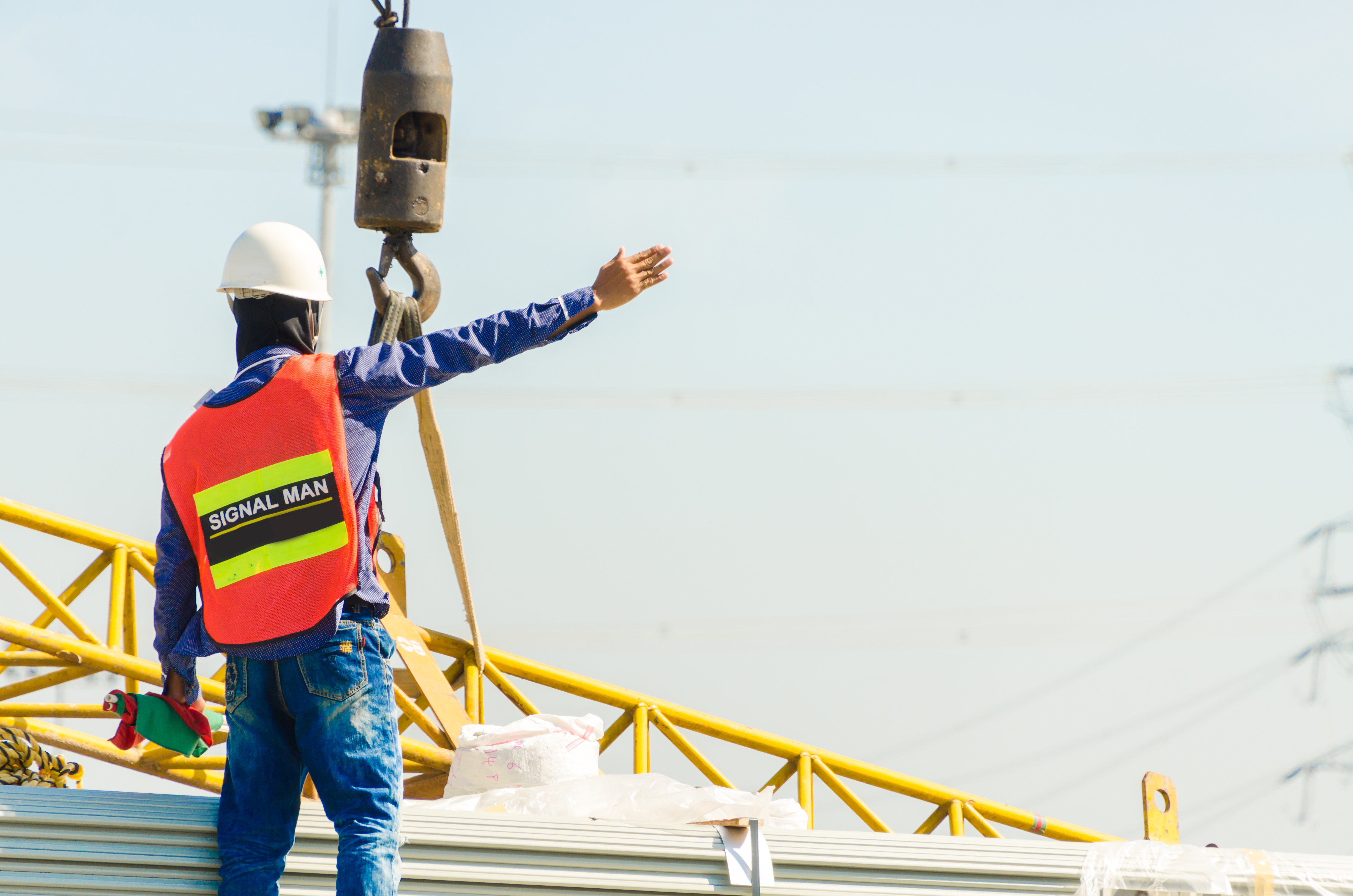
A banksman, also known as a signaller are often referred to as a traffic marshal too.
A Banksman plays an important role which involves maintaining certain responsibilities. Here are a few examples:
- Confidently and clearly direct the movement of vehicles safely
- Give correct, clear, and safe instructions or directions to plant operators
- Unloading and loading of vehicles
- Monitoring the road or pathways to ensure there are no obstructions, other moving vehicles, or pedestrians
Statistics
According to the HSE (Health and Safety Executive), every year, there are over.
- 5000 accidents involving transport in the workplace
- About 50 of these result in people being killed
- The main causes of injury are people falling off vehicles or being struck or crushed by them
Source: https://www.hse.gov.uk/pubns/indg199.pdf
Though often the term signaller is used interchangeably with the term banksman, they are referred to as different roles that hold different responsibilities.
Real-Life Examples of Banksman in Action
Banksman Signals
The Health and Safety (Signs and Signals) Regulations 1996 should be used when possible. Irrespective of the code of hand signals chosen, it is important that they are used consistently throughout the workplace. If employees are unfamiliar with the code in use, then appropriate training is necessary.
Where hand signals are used in line with The Health and Safety (Signs and Signals) Regulations 1996, ensure they are consistent with the code of signals shown in Schedule 1 of the Regulations or meet BS 7121-1:2006 code of practice for safe use of cranes which are referred to in Schedule 2 of the Regulations.
Below are some signal examples:
| Meaning | Description | Illustration |
|---|---|---|
| MOVE FORWARDS | Both arms are bent with the palms facing upwards and the forearms make slow movements towards the body. |  |
| MOVE BACKWARDS | Both arms are bent with the palms facing downwards and the forearms make slow movements away from the body |  |
| RIGHT to the signalman | The right arm is extended more or less horizontally with the palm facing downwards and slowly makes small movements to the right. |  |
| LEFT to the signalman | The left arm is extended more or less horizontally with the palm facing downwards and slowly makes small movements to the left |  |
| HORIZONTAL DISTANCE | The hands indicate the relevant distance. |  |
| D Danger | ||
| DANGER Emergency stop | Both arms point upwards with the palms facing forwards. |  |
| QUICK | All movements faster. |  |
| SLOW | All movements slower. |  |
Banksman Training
It is essential that banksman receive regular refresher training to ensure that their skills and knowledge are up-to-date. Refresher training should be provided at least every three years or more frequently if the banksman is working on a high-risk site. The training should cover any changes in regulations, equipment, or procedures, as well as any incidents or accidents that have occurred on-site.
A banksman must also assess the site for potential hazards and ensure that the area is clear of obstacles before allowing the equipment or vehicle to move. They must be knowledgeable about the equipment and vehicles they are working with and understand the specific procedures and protocols for each type of equipment.
In addition to guiding equipment and vehicles, a banksman is also responsible for ensuring that all personnel on the worksite are aware of the movements taking place and any potential hazards associated with them. They must communicate effectively with the equipment operator, other workers on the site, and any members of the public who may be present.
Qualifications and Salary
There are no specific qualifications needed to become a banksman. However, you may approach your career by starting as an apprentice or working on a construction site. Though, those who have been appointed for the role of a banksman will need thorough training. Train4Academy offers an awareness course for those who are currently in banksman roles or wish to develop their training and hope to become a banksman in the future.
The average salary for a banksman role in the UK is approximately £15 an hour or £26,000 - £32,000 a year.
Banksman Training
- Accredited by CPD
- Certificate on successful completion
- Unlimited resits at no cost
